WHAT TO DOCUMENT
Share the details that shape the work.
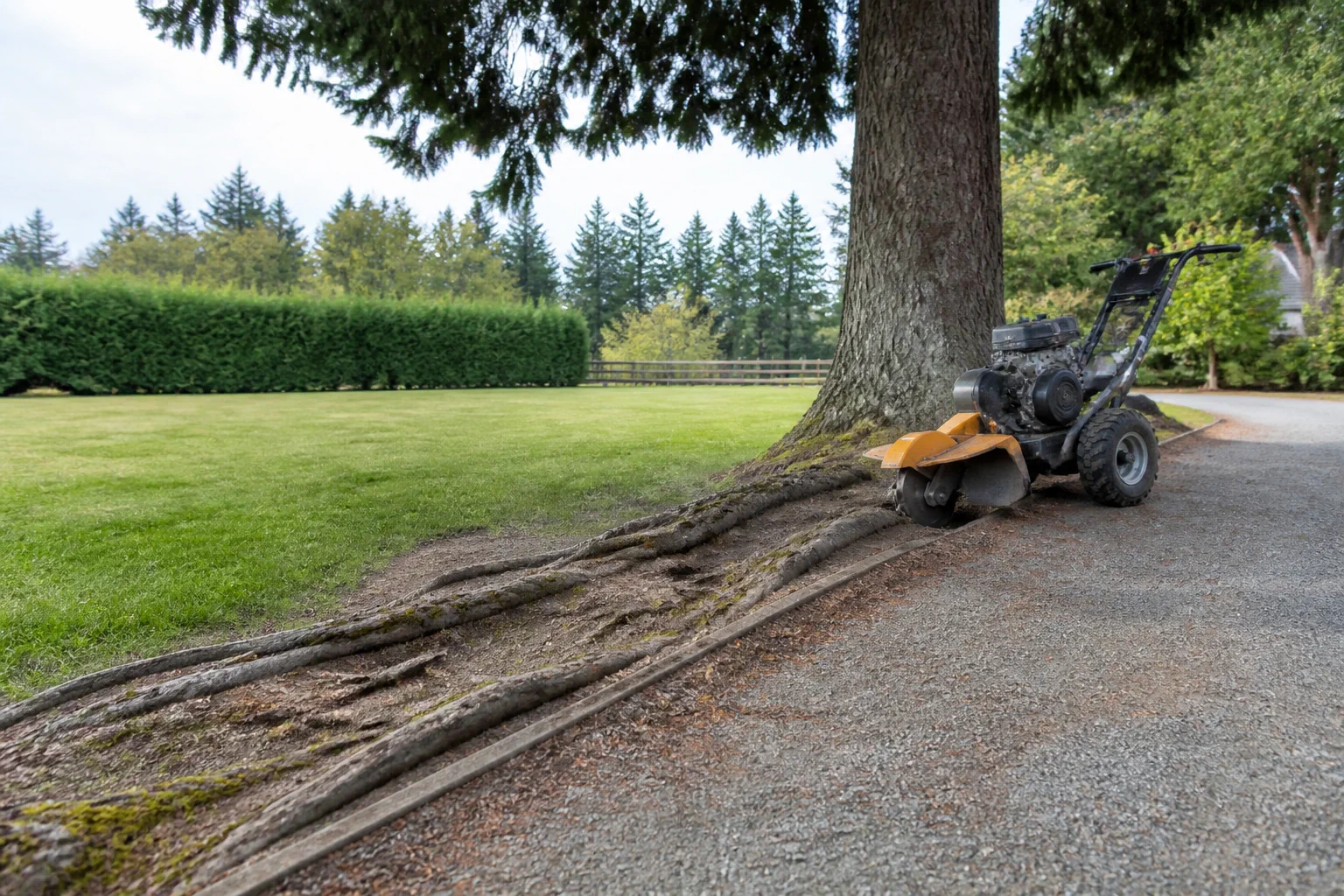
Photos should show the full root path, nearby trees, structures, irrigation, utilities, and the exact area that needs clearance before a provider reviews the request.
Begin with visible-root mapping
Visible-root mapping should trace each exposed section in wide and close photographs instead of showing only the point that interferes with the surface. Mark the requested clearance area and show how it relates to the stump, retained trees, grade, and planned repair.
Retained trees, hardscape, and utilities set boundaries
Roots can support a living retained tree or pass near hardscape, foundations, irrigation, drainage, lighting, gas, electrical, or communications services. Confirm ownership and locates where appropriate, and do not assume that every mapped root can be cut or ground.
Define the limits of selective root work
Selective root grinding addresses an agreed visible area; it is not a promise to remove an underground root system or prevent movement, decay, regrowth, or future surface effects. A provider must confirm the practical limits, and tree or construction advice may be needed for the planned result.
Use the widest visible diameter and identify the number of stumps or root sections.
Include wide context, close detail, access, obstacles, and the planned finish area.
Describe the intended result, desired depth, cleanup preference, and timing.
Check protected-root considerations
Review Abbotsford request areas